Cold Plunge Tub12 Checks Before Buying an Inflatable Cold Plunge Tub
12 Checks Before Buying an Inflatable Cold Plunge Tub
The short answer
Before buying an inflatable cold plunge tub, check its filled dimensions, stability, insulation, cover, and how it holds its shape under use. Confirm whether it works with a chiller or relies on ice, then check fittings, water care, drying, storage, warranty, and the space needed for setup.
Some links on this site are affiliate links: if you buy through one, the site may earn a commission at no extra cost to you. More about this.
This guide covers 12 checks for comparing setup options, upkeep, and the trade-offs of an inflatable model. The checks draw on published specifications, vendor claims, and buyer reports. Shoppers searching for an inflatable cold plunge tub often compare a few well-known options side by side, including a 216-gallon XXL tub that a YouTube review presents as a large-capacity recovery option, the Beyond Cold Journey inflatable plunge with a high-quality build, budget picks from marketplaces listed under "cheap cold plunge" and "affordable cold plunge tubs," and the Revive inflatable tub from Peak Primal Wellness. Use the checks below to test any of them, not just these.
Garage Gym Reviews’ Coop noticed that inflatable models bow outward after filling and use, and may need reinflating. This guide is based on published specifications and buyer reports; I haven’t used these products.
Let's dive in.
Ice or Chiller
| Option | Best suited for | Consideration |
|---|---|---|
| Ice | Occasional plunging | Manage ice and water changes |
| Chiller | Regular routine, target temperature | Needs space and power |
Ice is the lower-cost route for a few sessions a month, but each session means buying bags of ice, which adds to the price per use. A chiller removes that cost and keeps the water at a set temperature, but it adds an upfront purchase, a power outlet, and a place to sit. Many people in the search results weigh price per use against convenience before choosing.
A closer look at each
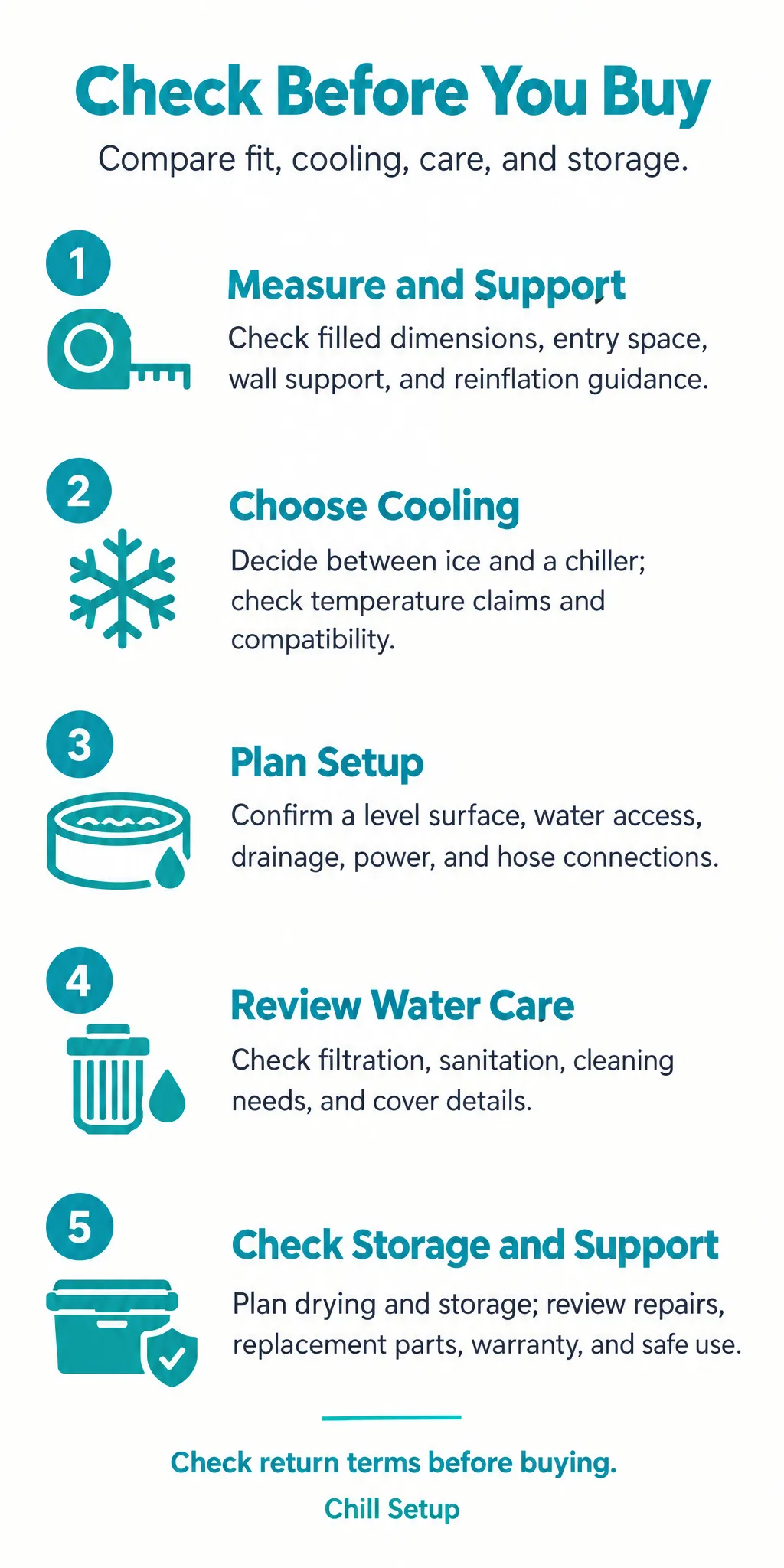
Measure the Tub and Its Filled Footprint: Check the dimensions when the inflatable cold plunge is set up, then allow room to get in, add water, and connect a filter or chiller. Compare the interior size with your height and preferred position. For example, an upright plunge needs enough depth for your body to fit comfortably. Inflatable tubs are often sold by package size, so confirm whether the listed size is the filled interior or the packaged size.
Check Stability and Wall Support: Flexible walls can bow outward under the weight of the water, which may change the shape or affect where the tub sits. In Garage Gym Reviews’ test, Coop noticed inflatable models bowing after filling and use. Check whether the maker specifies wall support and a level surface. Ask about the weight when full, since a filled tub of any size can be heavy, and confirm the floor can carry it.
Find Out How Often It May Need Reinflation: Ask how the inflatable cold plunge is expected to hold air during regular use, and whether the maker gives a reinflation schedule. Garage Gym Reviews’ Coop reported that inflatable models may need reinflating. An air-pressure check before each session is one easy way to monitor it.
Compare Insulation and the Cover: Look for stated insulation materials or thickness, and check whether a fitted cover is included. These details affect how well the unit retains temperature between sessions. Garage Gym Reviews’ Coop found the Cold Pod and The Pod Company models poorly insulated, so they didn’t hold ice for long. A cover reduces heat gain and keeps debris out, though it doesn’t replace insulation.
Decide Between Ice and a Chiller: Ice can suit occasional plunging, while a chiller may fit a regular routine if you want to set a target temperature. Work out how you’ll add ice and manage water changes, or where the chiller will sit. Check for space and power nearby. Because a chiller needs a steady power supply, confirm the outlet and cord length before you commit.
Verify Chiller Compatibility Before Ordering: Check the maker’s approved chiller connections, hose size, and flow requirements before buying either part. A filter or pump may also be needed for the system to work as intended. Confirm that the chiller’s inlet and outlet match the unit’s fittings, not just its advertised capacity. Some chiller makers list specific tub models they support, so search for those lists before you buy.
Understand Temperature Claims: Check the insulation and whether the chiller is included or compatible. An inflatable cold plunge may need more ice if it loses heat quickly. Garage Gym Reviews found the Cold Pod and The Pod Company models poorly insulated, so they didn’t hold ice for long. Confirm the stated range, then ask how it was measured. Cold plunge temperatures are often quoted in both Fahrenheit and Celsius, so check which unit a listing uses.
Plan the Setup and Filling: Measure the dimensions and the route to the chosen spot. Check access to a level surface, a water supply, drainage, and power if you’ll use a chiller. Confirm the hose connections before filling. In Dorian Develops’ Desert Plunge review, filling took longer than the roughly 15-minute assembly. Budget time for filling a large tub, since a full fill can take well over an hour on a typical garden hose.
Check Cleaning, Filtration, and Water Care: Find out whether a filter is included, what treatment the water needs, and how often the maker says to clean or replace parts. A cover can help keep debris out, but it doesn’t replace water care. Jason Khalipa told Garage Gym Reviews that the Plunge’s water and filters needed changing about once a month. Ask about sanitation and ongoing maintenance before purchase, and check whether replacement filters are sold by the maker or are generic.
Check Deflation, Drying, and Storage: Ask how the model deflates, whether it folds, and how much space it takes when stored. Plan to drain and dry it fully before packing it away; trapped water can complicate storage. Garage Gym Reviews’ Coop observed inflatable models bowing outward after filling and use, and said they may need reinflating. A tub that packs into a small bag is easier to move and store, which matters if you have limited space or plan to take it to a different location.
Compare Durability, Repairs, and Ongoing Needs: Check the material, warranty, replacement parts, and what the vendor says about patching leaks or reinflating the unit. Ask whether the chiller, filter, and hoses are standard or model-specific. Garage Gym Reviews’ Coop reported leakage issues with the Renew Cold Stoic 2.0, so check the repair process before buying. This also helps you plan maintenance. Look at how quickly a vendor responds to warranty claims, and whether you can buy a repair kit separately.
Check Safety and Whether the Routine Fits: Consider whether cold plunging is appropriate for you, and ask a healthcare professional if you have a health concern. Plan a safe entry and exit, keep the unit stable, and follow the maker’s temperature and use guidance. Make sure you can reach the chiller controls without leaning over a full tub. Anyone considering this for recovery or wellness should also consider whether the routine fits their needs. Athletes and training groups often use cold plunges after hard sessions, but the same caution applies: start with short sessions and build up slowly.
Other options
Several other inflatable options appear in search results and may suit different budgets and setups. Use the checks above to compare them, and read each maker's current specifications before buying. These include a large-capacity XXL tub, a budget-focused marketplace listing, and a mid-range inflatable from Peak Primal Wellness. This article does not rank them, since several specifications and buyer reports still need to be verified.
What hands-on reviewers found
These are other people's hands-on tests, summarised and credited to them. Watch the full videos for their complete reviews.
Garage Gym Reviews: The Best Cold Plunge Tubs: $99 to $10K+ Tried & Tested!
Coop recommends the Nordic Wave Viking as his favorite cold plunge tub for its upright dunk-in design, build quality, included chiller and step, and mid-range price.
- He found the Cold Pod and The Pod Company tubs poorly insulated, so they did not hold ice for long. (at 4:51)
- He recommends the Ice Barrel 300 for users under 6'2 and the Ice Barrel 400 for taller users. (at 5:54)
- He noticed that inflatable tubs bow outward after filling and using them, and may need reinflating. (at 14:04)
Garage Gym Reviews: The Cold Plunge Review: The Ultimate Ice Bath Tub!
Coop thinks the Plunge is convenient and well built for regular cold plunges, but its price makes it a luxury rather than a necessary purchase.
- Coop found the water at 43 degrees and noted that the Plunge cools water without requiring ice. (at 1:07)
- Coop preferred the Ice Barrel's upright, more athletic sitting position to the Plunge's reclined position. (at 4:59)
- Coop said the Plunge can reach 39 degrees and hold that temperature consistently. (at 5:32)
Frequently asked questions
Can I use my bathtub as a cold plunge?
Yes, a standard bathtub can work for occasional cold plunges if it holds enough water for you to sit or lie comfortably. You’ll need a way to cool it, such as adding ice, and you’ll still need to clean the bath. Check that the level and position feel safe.
Are cold water plunge pools good for you?
Many people use cold plunges as part of a recovery or wellness routine, and some athletes use them after training. The research on their benefits is mixed and still developing, so treat them as one option rather than a guaranteed result. Cold exposure can be hard on the heart and is not suitable for everyone, so talk to a healthcare professional first if you have a heart condition, high blood pressure, or another medical concern. Keep sessions short and never plunge alone.
What company makes the best inflatable hot tub?
There isn’t one best company for everyone, and this guide focuses on inflatable cold plunge tubs rather than hot tubs. For a hot tub, compare heating, insulation, filtration, and warranty terms across makers. If you want a combined unit, see the next question.
Is there a hot tub that is also a cold plunge?
Some hot tubs can be run at cooler temperatures, and some makers sell units with a chiller option that cools water for plunging. Check whether the heater and chiller are both supported, how quickly the unit can change temperature, and whether the cooling system is sized for the tub. Ask the maker whether a single tub is rated for both uses.
What is the best inflatable cold plunge?
There isn’t one best choice for everyone. The right inflatable cold plunge depends on your space, budget, and cooling plan. Compare filled stability, insulation, dimensions, drainage, and compatibility with a chiller. Check how it stores and whether buyers report bowing walls or a need to reinflate it. For indoor or outdoor use, confirm that the intended location suits the maker’s instructions.
Can I go straight from a cold plunge to a hot tub?
You can move from a cold plunge to a hot tub, but the rapid temperature change may feel intense and can affect how you feel. Keep the session moderate, get out if you feel faint or unwell, and ask a healthcare professional about temperature exposure if you have a medical condition.
Is an ice bath the same as a cold plunge?
An ice bath and a cold plunge both involve sitting in cold water. “Ice bath” often means ice is added to cool it, while “cold plunge” can describe a bath cooled with ice or a chiller. The terms overlap, so check the cooling method and stated temperature range.
Do inflatable cold plunge tubs need to be reinflated?
They can. Inflatable walls may bow outward under the weight of the water and during use, so check the maker’s instructions and plan to inspect the pressure. In Garage Gym Reviews’ test, Coop noticed inflatable models bowing and said they may need reinflating.
Wrapping up
These 12 checks can help you compare an inflatable cold plunge’s stability, cooling, storage, and upkeep before you buy. The right fit depends on your space and how you plan to cool it. If you decide to buy, check the return terms and warranty before adding a model to your cart. Compare options over the first few weeks of use, and follow the maker’s maintenance guidance every time.
Which item will you check first, or which one did we miss?