12 Cold Plunge Tub Options and Buying Checks for Home

The short answer
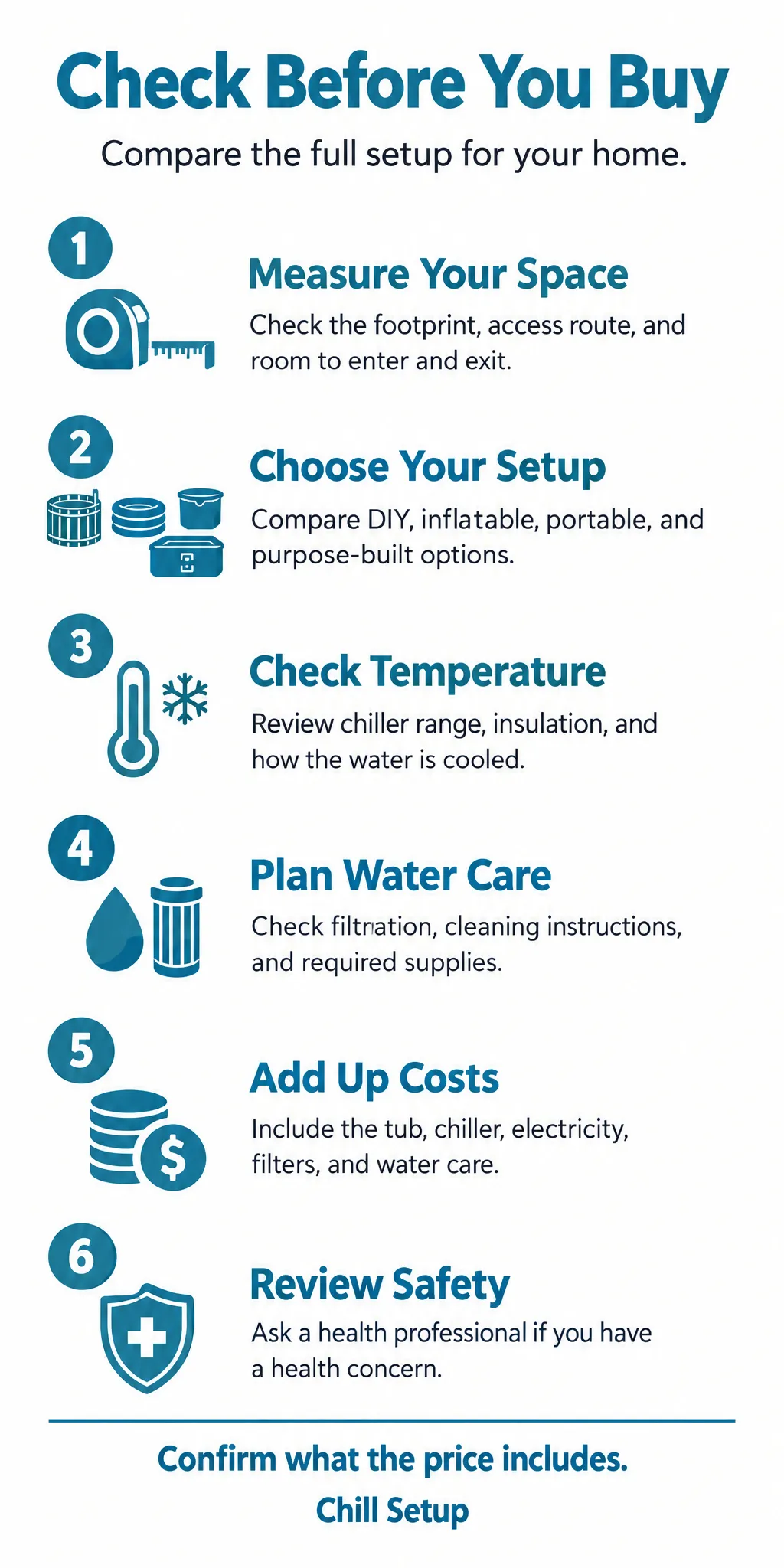
A cold plunge tub for home can be a DIY setup, an inflatable or portable tub, or a purpose-built model with a chiller. Compare the total setup, tub dimensions, insulation, temperature controls, cleaning needs, and ongoing costs. Check that it fits your space and suits your health needs before buying.
Some links on this site are affiliate links: if you buy through one, the site may earn a commission at no extra cost to you. More about this.
This guide compares 12 cold plunge tub options and the key checks for choosing one. The options were selected by comparing published specifications, vendor claims, and buyer reports. We haven’t used these products.
You’ll see how DIY, inflatable, portable, and purpose-built units differ in setup, space needs, temperature control, and upkeep. Then you can check the details that matter for your home and routine.
Let's dive in.
Guides on this site
What is a cold plunge?
A cold plunge is a tub of cold water, usually kept between about 39 and 59 degrees Fahrenheit (4 to 15 degrees Celsius), that you sit or stand in for a short period. People use cold plunges after exercise, as part of a recovery routine, or simply for the sensation of cold water. Some tubs are filled with ice, while others use a chiller to hold a set temperature. Many people also pair a cold plunge with a sauna, but the two are used separately.
Cold plunge tub options at a glance
| Option | Best for | Key detail | Temperature control |
|---|---|---|---|
| DIY Cold Plunge Tub | Basic building skills | Room and time for water care | Not stated |
| Inflatable Cold Plunge Tub | Tight storage space | May need reinflation | Not stated |
| Portable Cold Plunge Tub | Moving or storing the tub | Cooler weighs 104 lb empty | Not stated |
| Purpose-Built Cold Plunge Tub | Repeated cold plunges | May include insulation and cover | Not stated |
| Cold Plunge Tub With Chiller | Cooling without adding ice | Chiller cools and circulates water | Plunge reached 39 degrees |
| Cold Plunge Tub Without a Chiller | Choosing your cooling method | May add ice or a chiller later | Ice or separate chiller |
| Cold Plunge Barrel | Upright entry and sitting | Ice Barrel 300 for users under 6'2 | Not stated |
| Vertical Cold Plunge Tub | Upright dunk-in position | Check entry and inside dimensions | Not stated |
A closer look at each
DIY Cold Plunge Tub: A DIY unit can suit buyers with basic building skills, room for the setup, and time for water care. Compare the price of the vessel, insulation, and any chiller before you start. See our separate guide to building one.
Inflatable Cold Plunge Tub: An inflatable model can be packed away when space is tight, but check how it handles regular filling and use. Garage Gym Reviews’ Coop observed inflatable tubs bowing outward after filling and use, and sometimes needing reinflation. Before you shop, check the materials and care instructions.
Portable Cold Plunge Tub: Portable models suit buyers who may need to move or store their unit. Check the filled footprint, empty weight, and whether hoses or a chiller need a fixed spot. In Dorian Develops’ review, the cooler weighed 104 lb empty.
Purpose-Built Cold Plunge Tub: A purpose-built model is designed for repeated use, with features such as insulation, a cover, or a fitted entry. Garage Gym Reviews’ Coop praised the Nordic Wave Viking’s upright position, insulated tub, cover, and included step. Compare the product details and price with those of simpler plunge tubs.
Cold Plunge Tub With Chiller: A unit with a chiller cools and circulates water without adding ice before each session. Check the chiller’s stated temperature range, power needs, and maintenance. Garage Gym Reviews found the Plunge could reach 39 degrees and hold that temperature consistently. A chiller may make daily use easier, but include its price and service needs in your budget.
Cold Plunge Tub Without a Chiller: A model without a chiller lets you choose the cooling method, including adding ice or buying a separate chiller later. Check insulation, capacity, and the ongoing price of ice for your regular use. Garage Gym Reviews found the Cold Pod poorly insulated, so it didn’t hold ice for long. If you shop for this type, look for clear information about capacity and upkeep.
Cold Plunge Barrel: A barrel-style model gives you an upright entry and sitting position; a longer unit may let you recline. Garage Gym Reviews’ Coop recommends the Ice Barrel 300 for users under 6'2 and the Ice Barrel 400 for taller users. Compare the fit before you add one to your shortlist.
Vertical Cold Plunge Tub: Check the inside dimensions, seat or foot support, and how you’ll step in and out. Garage Gym Reviews’ Coop preferred the Nordic Wave Viking’s upright dunk-in position to lying down in a tub. Review its entry design and chiller setup, then compare both with your available space. For a clear comparison, sort models by dimensions, features, and price.
Stainless Steel Cold Plunge Tub: Steel can appeal if you want a particular finish, but check the product specifications for insulation, corrosion care, cleaning instructions, and warranty coverage. Ask whether the unit includes a chiller or needs one separately. Check the quality of the finish and care guidance before you shop. For more material-specific checks, see the stainless steel cold plunge tubs guide.
Fit, Entry, and Space: Measure the footprint, the route to its final spot, and room to get in and out. In Dorian Develops’ review, the Desert Plunge cooler weighed 104 lb empty, and moving it through a side gate took effort. Check access before purchase. Make sure the location is ready for the unit and any required connections. A tub that fits your bathroom or garage also needs to fit through the door and sit on a level floor.
Temperature, Insulation, and Water Care: Ask what temperature the chiller can reach, how it’s measured, and what filtration or water treatment the product requires. In Garage Gym Reviews’ test, Coop found the Plunge could reach 39 degrees and hold it consistently; Jason Khalipa said water and filters needed changing about once a month. Include filters and care supplies in your daily-use budget. Good insulation helps a tub hold its temperature, so compare this detail across models.
Price, Ongoing Costs, and Safety: Compare the purchase price with electricity, filters, water care, and any separate chiller. Look at the sale price as well as the regular price, and check what the listed price includes. Garage Gym Reviews’ Coop said the Plunge cost right under five thousand dollars and suited regular users. Ask the seller about service, warranty coverage, and available accessories. A low price may not include everything needed for the full setup. Cold plunge therapy can feel intense, and people may respond differently. If you have a health concern, ask a health professional before starting and plan a safe way to exit.
Can I use my bathtub as a cold plunge?
You can fill a standard bathtub with cold water and ice, and many people do. It's a low-cost way to try cold immersion. The drawbacks are that a bathtub usually can't hold a steady cold temperature without a lot of ice, it's harder to keep clean with the water and ice mix, and it may not be deep enough for a full plunge. If you use one, fill it only as cold as you can safely manage, keep a clear way to get out, and drain and clean it after each use.
Is it good to go from sauna to cold plunge?
Many people alternate heat and cold, and some find it comfortable. Go from a sauna to a cold plunge only after you've rested and your heart rate has settled, and keep the plunge brief at first. Sudden temperature changes can strain the body, so people with heart conditions, high or low blood pressure, or other health concerns should check with a health professional first. Never plunge while dizzy, lightheaded, or after drinking alcohol.
What is a Nordic wave?
A Nordic wave is a type of cold plunge in which the water is kept cold and users sit upright in an insulated tub, often with a chiller and a cover. The term is used loosely by some brands, so check the product's stated design, insulation, and cooling method rather than the name alone. Garage Gym Reviews' Coop reviewed the Nordic Wave Viking in this upright, insulated format.
What hands-on reviewers found
These are other people's hands-on tests, summarised and credited to them. Watch the full videos for their complete reviews.
Garage Gym Reviews: The Best Cold Plunge Tubs: $99 to $10K+ Tried & Tested!
Coop recommends the Nordic Wave Viking as his favorite cold plunge tub for its upright dunk-in design, build quality, included chiller and step, and mid-range price.
- He found the Cold Pod and The Pod Company tubs poorly insulated, so they did not hold ice for long. (at 4:51)
- He recommends the Ice Barrel 300 for users under 6'2 and the Ice Barrel 400 for taller users. (at 5:54)
- He noticed that inflatable tubs bow outward after filling and using them, and may need reinflating. (at 14:04)
- He said the Renew Cold Stoic 2.0 cooled to a much lower temperature than its display indicated and had leakage issues. (at 15:43)
Garage Gym Reviews: The Cold Plunge Review: The Ultimate Ice Bath Tub!
Coop thinks the Plunge is convenient and well built for regular cold plunges, but its price makes it a luxury rather than a necessary purchase.
- Coop found the water at 43 degrees and noted that the Plunge cools water without requiring ice. (at 1:07)
- Coop preferred the Ice Barrel's upright, more athletic sitting position to the Plunge's reclined position. (at 4:59)
- Coop said the Plunge can reach 39 degrees and hold that temperature consistently. (at 5:32)
- Coop found the acrylic tub's design simple and suitable for different spaces, but disliked that it came only in white. (at 5:32)
Cold Plunge Podcast: Best Cold Plunges RANKED & REVIEWED (2026 Update)
The reviewer recommends either a $100 to $150 tub for beginners or spending around $3,000, with the Mod Tub 2.0 as his top pick for most buyers.
- After reviewing the Vital Plus, he found the tub, chiller, and pump worked, but described the overall experience as serviceable rather than great. (at 1:41)
- Based on extensive reviews, he found the Mod Tub 2.0 sleek, with a built-in lid and insulation he expects to work in Arizona summers and cold winters. (at 3:54)
- He said his videos on the Active Aqua Quarter HP Chiller informed his view that a quarter-horsepower chiller is enough for 99% of people. (at 4:54)
- He said the Cryospring Barton is the tub he uses for daily cold plunges; its insulation is thicker and its tub is bigger than the Mod Tub 2.0. (at 6:04)
Dorian Develops: Best Cold Plunge Tub & Chiller Setup You Can Buy // Desert Plunge Review
The reviewer considers the Desert Plunge Wide with the Active Aqua quarter-horsepower chiller his favorite cold plunge setup, citing its easy assembly, insulation, and clean water.
- The cooler weighed 104 lb empty, and moving it through his side gate and backyard took effort. (at 9:17)
- Assembly took about 15 minutes and required only a Phillips screwdriver; filling the tub took longer. (at 11:02)
- After filling the tub, he found no leaks, and the hoses and equipment fit together neatly. (at 11:34)
- The insulated cooler kept the water cold enough that the chiller did not have to run continuously. (at 13:47)
Frequently asked questions
Are cold plunge tubs worth it?
A unit may be worth considering if you'll use it regularly and want cold water at home without traveling to a gym or spa. Compare the price of the tub, chiller, setup, cleaning, and running costs. A basic tub with ice can cost less upfront, but needs more hands-on preparation. Think about whether it fits your wellness routine and what experience you want from it.
What happens after 30 days of cold plunge?
After 30 days of cold plunging, people may notice changes in how they respond to cold or how they feel after a session, but responses vary. There’s no guaranteed outcome or fixed timeline. Track your own response, keep sessions conservative, and stop if you feel unwell. Some people use cold exposure as part of recovery, but a particular result isn’t assured.
Are cold plunges actually healthy?
Cold plunges can feel invigorating, but they’re not suitable for everyone, and health benefits aren’t guaranteed. Sudden exposure to cold can place stress on the body. Some people use it for recovery or to see whether it reduces inflammation, but effects can vary. Research on mood, sleep, and inflammation is still limited and mixed, so treat any claimed benefit as unproven. Ask a healthcare professional before starting if you have a medical condition, and leave the water if you feel dizzy, numb, or unwell.
Can cold plunging help mood or sleep?
Some people report feeling more alert or calmer after a cold plunge, and some say it helps them sleep, but the evidence is limited. A cold plunge won't replace sleep habits, mood treatment, or medical care. If low mood or poor sleep is a concern, talk with a health professional. If you try a cold plunge for these reasons, judge the effect by your own experience over several weeks.
How many minutes a week should you cold plunge?
There’s no single weekly duration that suits everyone, and a session doesn’t need to be long to feel intense. Start with brief sessions, pay attention to how you feel, and avoid chasing a set weekly total. Get medical advice first if you have a health concern. Build any routine around your own response rather than a fixed schedule.
What should you check before buying a cold plunge tub for home?
Check that the unit fits your space and your body, and confirm how it reaches and holds temperature. Review drainage, filtration, cleaning needs, power requirements, cover, and warranty. For a chiller setup, check that the product and chiller are compatible and that you can move and maintain them. Ask every seller for a clear list of what’s included, the total price, and any ongoing costs. If you have questions, call the seller before you buy.
Wrapping up
This guide compares 12 cold plunge tub options for home use.
The right fit depends on your space, budget, temperature needs, and upkeep tolerance.
Which of the 12 would you try first, or which option did we miss?