Cold Plunge Tub12 Things to Check Before Buying a Cold Plunge Tub Only
12 Things to Check Before Buying a Cold Plunge Tub Only
The short answer
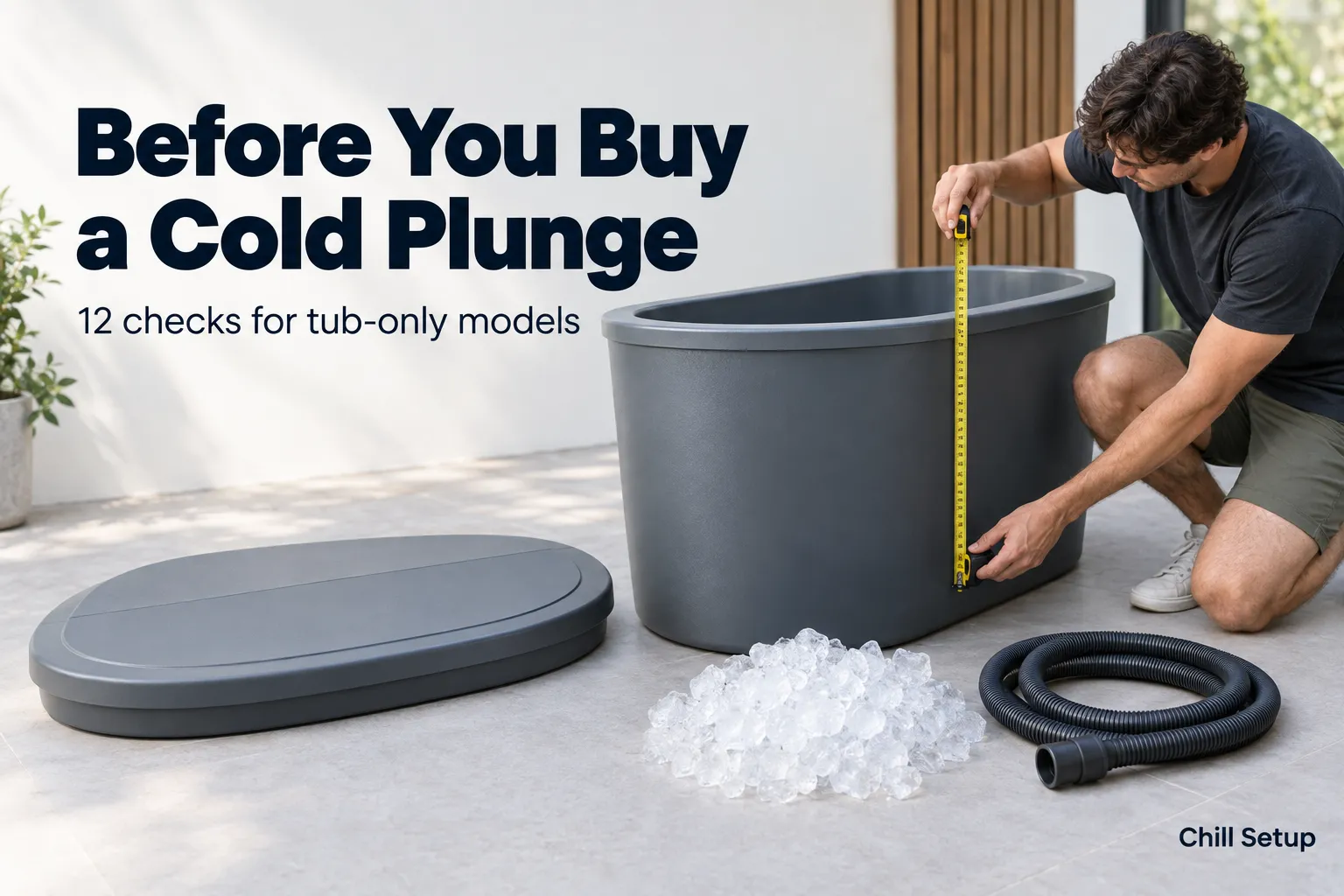
A cold plunge tub only is a tub sold without a chiller, so you cool the water with ice or add compatible cooling equipment later. Before buying, check the tub's insulation, cover, capacity, drainage, water-care needs, and chiller ports. Also estimate the effort and ongoing cost of keeping the water cold with ice.
Some links on this site are affiliate links: if you buy through one, the site may earn a commission at no extra cost to you. More about this.
These 12 checks can help you compare ice use, setup, upkeep, and upgrade options. I chose them to focus on details that affect daily use and later chiller compatibility.
This guide draws on published specifications, vendor claims, and buyer reports. Let’s dive in.
Ice or chiller cooling
| Option | Cooling approach | Consideration |
|---|---|---|
| Ice | Add ice before a plunge | Regular supply and time |
| Chiller | Handles cooling once set up | Space available |
A closer look at each
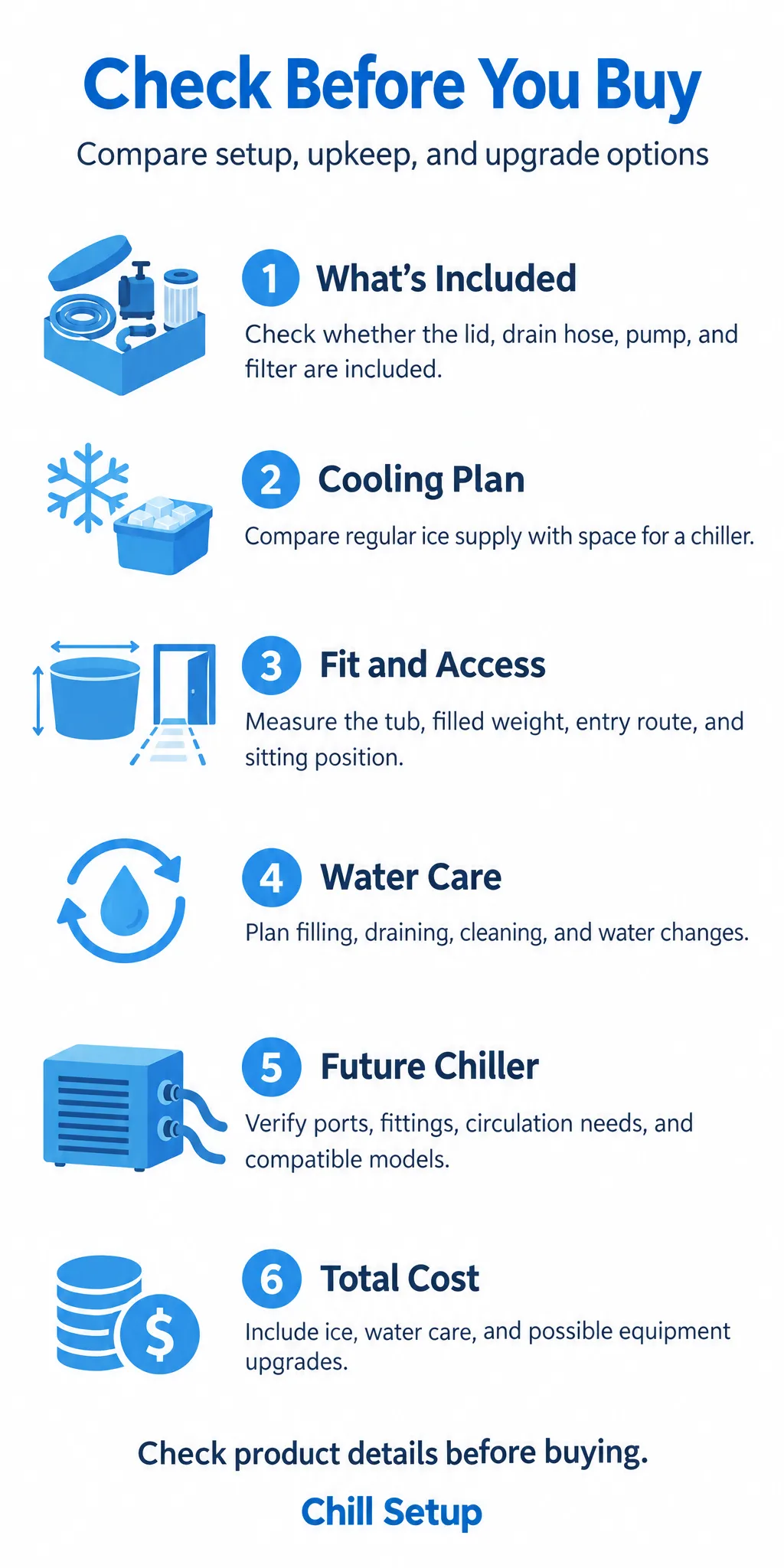
Confirm What “Tub Only” Includes: A cold plunge tub only may include the vessel and lid, while a drain hose, pump, filter, insulation, or chiller may be separate. Check the product list before buying. This makes it easy to see what you’ll need for filling, draining, and keeping the water clean.
Work Out Whether Ice-Only Cooling Fits Your Routine: Ice can cool a tub without a chiller, but you’ll need a regular supply and time to put it in before a session. A chiller handles cooling once set up. Compare both approaches with how often you plan to use the unit and the space available. Ice-only cooling may be right if you’re comfortable making ice part of your wellness routine.
Check Insulation and the Lid: An insulated tub and a well-fitting lid slow heat entering the water, which can reduce how often you need ice. In Garage Gym Reviews’ test, Coop found the Cold Pod and The Pod Company tubs poorly insulated, so they didn’t hold ice for long.
Measure the Tub and Your Route to Its Location: Check the footprint, height, filled weight, and access route before ordering. A model that fits on the patio may still be hard to move through a gate or doorway. In Dorian Develops’ review, the Desert Plunge cooler weighed 104 lb empty and took effort to move through a side gate. If you want a portable unit, check its empty weight and route before you buy.
Compare Sitting Position and Entry: Choose a shape you can enter safely and sit in comfortably. That can affect whether the experience suits your regular wellness routine. Coop of Garage Gym Reviews preferred the Ice Barrel’s upright, more athletic position to the Plunge’s reclined position. Check the internal dimensions against your height and preferred posture to find the right fit.
Check Drainage, Filling, and Access to Water: Look for a reachable drain outlet and a practical way to direct water away from the unit. Check whether a hose can reach the fill point. If there’s no filtration, plan how you’ll clean it and change the water as part of regular upkeep.
Plan Water Care Without Built-In Filtration: A basic cold plunge tub may leave water care to you. Check the product instructions for recommended cleaning, treatment, and water-change frequency. Then decide if that work fits your space and schedule. Without filtration, leaves, sweat, and other debris can collect between sessions.
Check Cleaning and Water-Change Access: Before you buy, consider how you’ll drain, rinse, and refill the tub. A drain near a suitable outlet makes changes easier. A unit tucked behind storage can make cleaning a hassle. Check whether the product includes a drain hose or requires you to buy one separately.
Verify Compatibility With a Future Chiller: If you may add a chiller later, check the ports, hose connections, and circulation requirements now. Confirm that the manufacturer lists compatible chiller models and whether you’ll need a pump or fittings. A unit designed for ice only may limit your upgrade choices.
Compare the Total Cost of Ice and Upgrades: The initial price is only one part of the cost. Include ice, water care, and any future chiller or pump in your estimate. If adding ice before every session sounds like a chore, compare the price of upgrades before choosing a lower-cost tub. Consider the benefits of each approach, including the time needed for upkeep.
Check Durability, Storage, and Warranty Details: Read the warranty for coverage, exclusions, and claim steps. Check the empty weight and storage needs, too. Garage Gym Reviews found inflatable tubs can bow outward after filling and use, and may need reinflating. That’s one detail to weigh against easier storage. Check whether the manufacturer offers free warranty support and what it covers.
Make a Safe, Realistic Use Plan: Plan how you’ll get in and out, especially if the tub is tall or sits on a slippery surface. Start with a conservative daily routine, and check with a healthcare professional if you have a medical condition or aren’t sure cold exposure is appropriate for you. Cold therapy is not suitable for everyone.
What hands-on reviewers found
These are other people's hands-on tests, summarised and credited to them. Watch the full videos for their complete reviews.
Garage Gym Reviews: The Best Cold Plunge Tubs: $99 to $10K+ Tried & Tested!
Coop recommends the Nordic Wave Viking as his favorite cold plunge tub for its upright dunk-in design, build quality, included chiller and step, and mid-range price.
- He found the Cold Pod and The Pod Company tubs poorly insulated, so they did not hold ice for long. (at 4:51)
- He recommends the Ice Barrel 300 for users under 6'2 and the Ice Barrel 400 for taller users. (at 5:54)
- He noticed that inflatable tubs bow outward after filling and using them, and may need reinflating. (at 14:04)
Garage Gym Reviews: The Cold Plunge Review: The Ultimate Ice Bath Tub!
Coop thinks the Plunge is convenient and well built for regular cold plunges, but its price makes it a luxury rather than a necessary purchase.
- Coop found the water at 43 degrees and noted that the Plunge cools water without requiring ice. (at 1:07)
- Coop preferred the Ice Barrel's upright, more athletic sitting position to the Plunge's reclined position. (at 4:59)
- Coop said the Plunge can reach 39 degrees and hold that temperature consistently. (at 5:32)
Frequently asked questions
Can I just cold plunge in my bathtub?
Yes, a regular bathtub can work for an occasional session if you can fill it with cold water or add ice. It may be harder to keep the water cold, and the tub might not offer enough room or insulation for regular use. Check its condition and follow safe cold-exposure practices.
Is a cold plunge tub worth it?
A cold plunge tub may be worth it if you’ll use it regularly and want a dedicated setup at home. A tub without a chiller can cost less upfront, but you’ll need to supply ice and manage water care. Compare those recurring tasks with the cost and upkeep of a chiller. These units may suit someone looking for recovery or wellness benefits, but individual experiences vary.
What happens after 30 days of cold plunge?
There’s no single result to expect after 30 days of cold plunging. People’s experiences vary, and effects depend on factors such as temperature, session length, and individual health. Track how you feel rather than assuming a set outcome, and ask a healthcare professional whether cold exposure is suitable for you. A short video from a qualified health professional may help explain general safety considerations.
How much does a cold plunge tub cost?
The price depends on size, material, insulation, and included equipment. A tub sold without a chiller may have a lower purchase price, but factor in ice, water-care supplies, and later upgrades. Compare the full setup and ongoing upkeep, since tub-only prices vary by model and seller. Check the seller’s details so you’re ready for the costs beyond the initial purchase.
What should I check before buying a cold plunge tub without a chiller?
Check capacity, insulation, the cover, drain, and the room needed for use and storage. Ask how the maker recommends cleaning and treating the water. Plan how you’ll get ice and whether the tub can accept a chiller later, including any required ports or compatible fittings. For outdoor use, make sure the location is suitable. Indoor use also requires enough room to get in and out safely.
Wrapping up
There are 12 things to check before buying a cold plunge tub only. Compare the features that matter for your needs, and check the seller’s specifications and customer reviews before choosing.
Which item will you check first?
Or is there one we missed?